Group Class Access for Graduates: How K9 Ambitions Alumni Stay Sharp
By K9 Ambitions · 6 min read · Updated
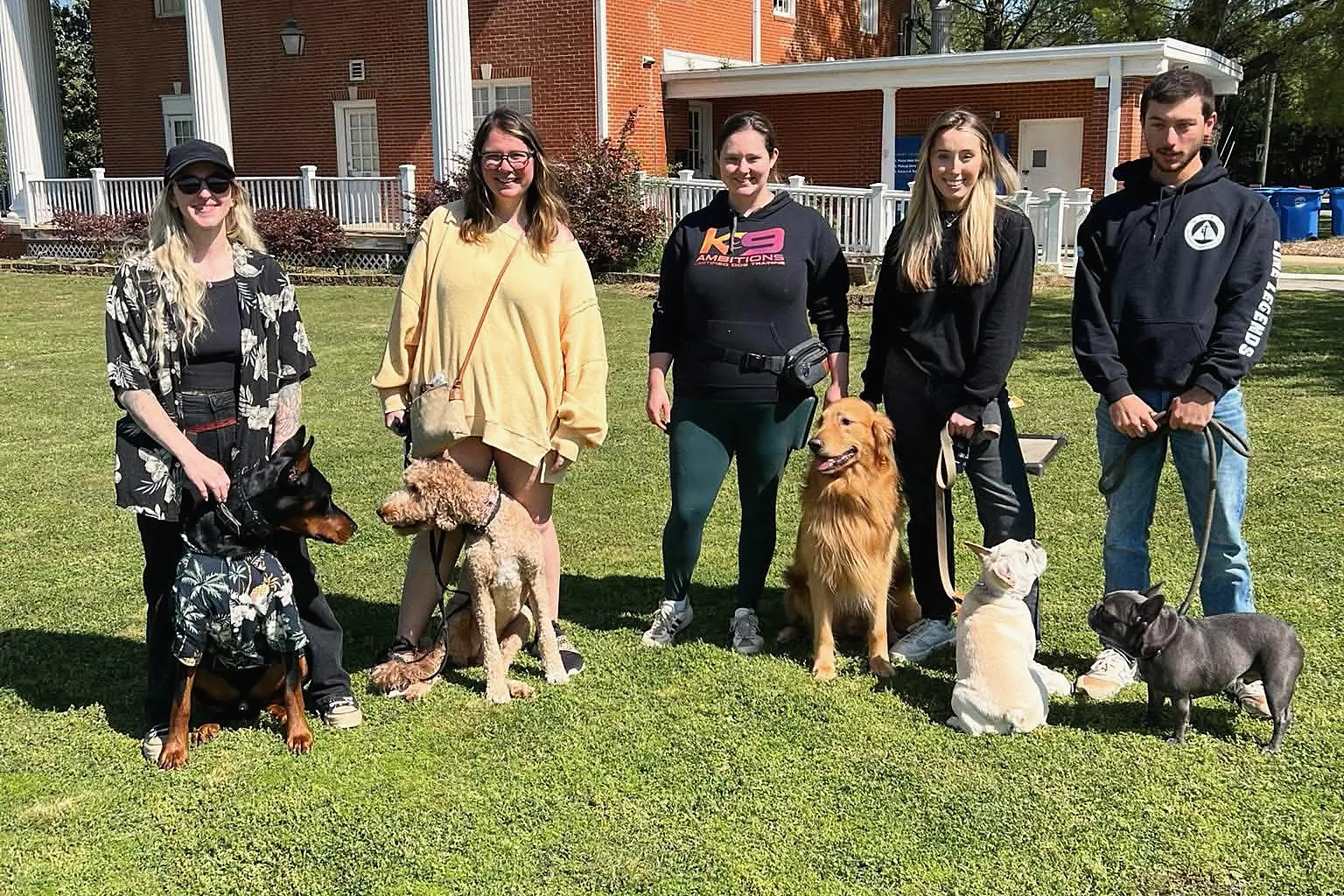
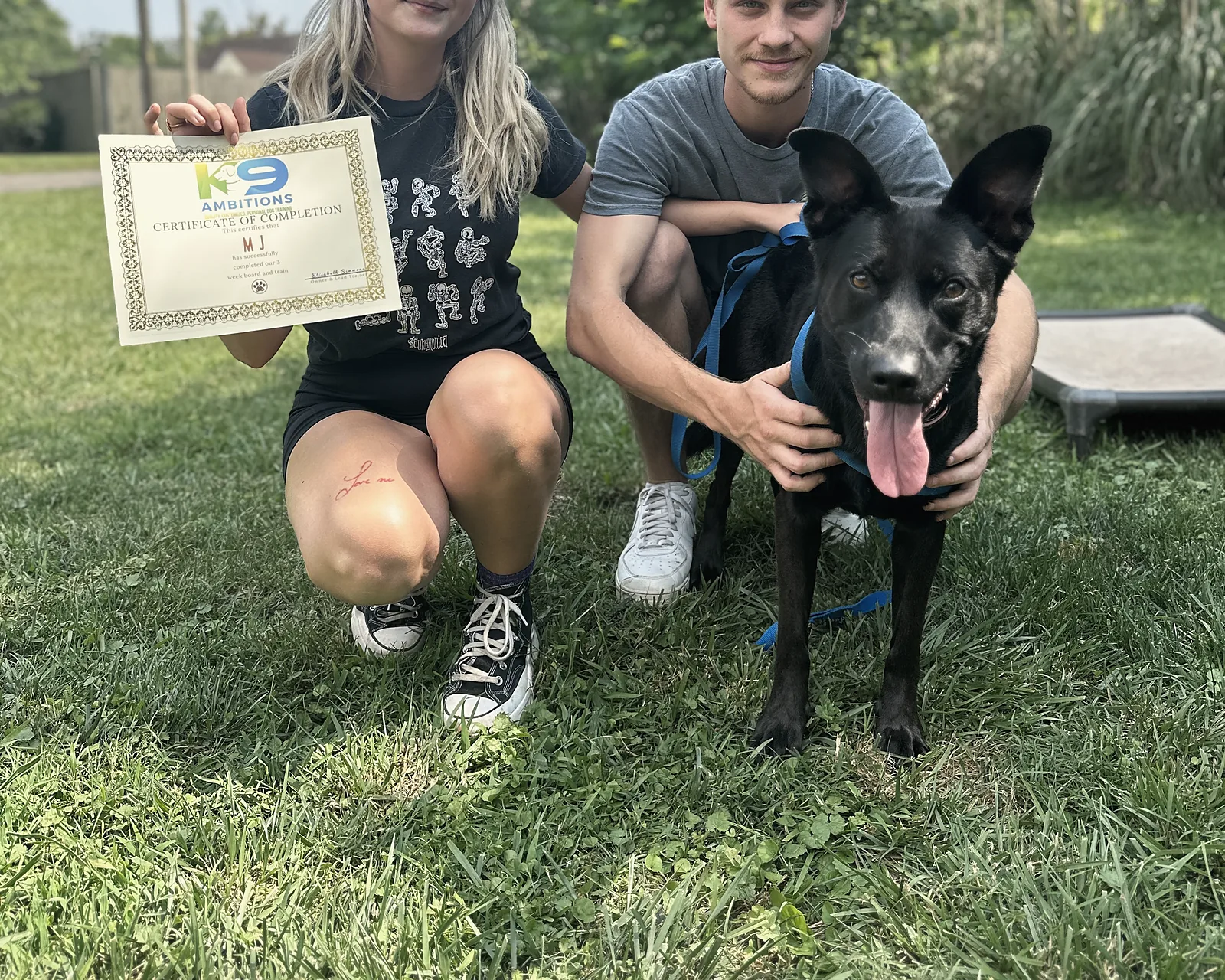
Group class access at K9 Ambitions is an alumni perk. It is not a public class, not a drop-in session, and not something you can purchase as a standalone service. The only way in is through a completed Board & Train program — 2, 3 or 5 weeks, full-time or Monday–Friday. That boundary is intentional, and this post is partly about why it exists.
If you are a Board & Train graduate, this is your guide to actually using what you earned. If you are a prospective client deciding between Board & Train and Private Lessons, this is the case for why the support after pickup matters.
What graduates actually get
Every Board & Train graduate (any length, full-time or Monday–Friday) keeps four perks the Private Lessons track doesn't include: lifetime support, free monthly group classes, graduate-only daycare ($20 a day, or $40 with training), and graduate-only in-home boarding ($35 a night, or $55 with training).
Lifetime support covers:
- the free private lessons for the move home (2 with the 3-week program, 3 with the 5-week);
- the alumni group class;
- direct access to your trainer by call, text and email;
- more private lessons you can buy whenever you need them;
- training while your dog boards with us (say, while you're on vacation) or comes to daycare.
You're not on your own after pickup. When life disrupts training, like a new baby, a move or a second dog in the house, you call, text or email your trainer. If you need hands-on help, you book more private lessons. That is not a marketing line. It is a practical commitment.
Group class access is the hands-on complement to that. When you feel your dog starting to drift — the leash is getting tighter again, the recall is getting slower, the heel has gotten sloppy — you have a standing venue to address it without re-enrolling in a full program. You show up, you work your dog, and you leave with tighter mechanics than you walked in with.
None of these perks come with Private Lessons. If you trained with us through private lessons and want group class access, the path is a Board & Train program with a new goal. There is no other workaround, and we are not going to pretend there is.
What a typical class looks like
Group classes are structured around real-world obedience in an environment that has something your living room does not: other dogs, unfamiliar people, and unpredictable distractions. That is the whole point.
A standard session runs through the foundation commands your dog already knows (heel, sit, down, place and recall) but puts them under pressure. Two dogs working in the same space changes the dynamic. A stranger walking past at the wrong moment changes the dynamic. Being asked to hold a down until you say "Break" while another team practices recall near you changes the dynamic. These are not novel situations your dog will never encounter. They are Tuesday.
Sessions also include handler mechanics work. If the leash is getting tight, we look at what the handler is doing with their body before we look at what the dog is doing with its feet. Most drift comes from the owner relaxing their timing, their posture, or their expectations — not from the dog forgetting the behavior. Group class is where those habits get corrected while they are still small.
We use the same methodology in group class that your dog trained under during the program. No new tools, no new frameworks. The dog already knows the language. The class is about putting that language to use in harder environments.
Who attends
Only K9 Ambitions alumni who have completed a Board & Train program. That is the complete list.
This is not exclusivity for its own sake. It exists because group classes work when the dogs in the room share a common training foundation. A group full of dogs at different obedience stages, trained by different methods, with handlers at wildly different skill levels is not a class — it is chaos with leashes. Dogs pick up on each other's uncertainty. Handlers pick up on each other's bad habits.
When every dog in the room has been through the same program under the same methodology, the floor is high enough that the class can actually do useful work. A dog in the room does not need to be managed around the other dogs — it needs to be worked in the presence of the other dogs. That distinction only holds when the group shares a foundation.
It is also worth saying clearly: alumni who attend class are not receiving charity. They are using what they paid for when they chose Board & Train. The access has value precisely because it is limited. A perk that is available to everyone is not a perk — it is a feature you have already discounted in the price.
How to plug in after pickup
After your dog comes home from Board & Train, you should expect a honeymoon phase. The dog is fresh, the behaviors are sharp, and the handling feels easier than it ever has. Enjoy it. Then expect the maintenance problem.
Maintenance is not failure. It is physics. Behaviors that are not practiced erode. They erode faster in some dogs than others, faster in some environments than others, and faster when the owner's handling mechanics slip. By the time most alumni notice the drift, it has been happening for four to eight weeks.
The signal to come to group class is not "my dog broke." The signal is "my dog is getting noticeably softer on one or two things." That is the right moment. Trying to address it before it looks like a problem is almost always easier than waiting until it clearly is one.
To plug in: reach out through the contact page and let us know you are a Board & Train graduate looking to attend a session. We will confirm the schedule and make sure the class size is manageable. We do not run large groups, and we do not double-book the space just to fill it.
Bring the same equipment your dog trained with. Come with realistic expectations about your own mechanics — if you have been a little sloppy at home, own it in the session and it will be easy to correct. If you walk in convinced your dog has regressed and the problem is all the dog's fault, expect to spend the first twenty minutes discovering that the leash tension started with your hand.
Why it comes with every Board & Train program
This is the section for prospective clients weighing Board & Train against training on their own afterward.
Here is the honest version: the dog you pick up at the end of any Board & Train program — two, three or five weeks — is not going to stay at that level without your effort. No program produces that. What lifetime support and group class access give you is a structured way to come back when your effort slips — not to start over, but to course-correct early. That is an enormous difference in practice. Catching a behavior slipping at week six is a group class visit. Catching it at month six is a longer conversation.
It also changes the psychology of ownership. Knowing you have a standing resource for the life of the dog means you are less likely to avoid addressing a problem because you do not know what fixing it will cost. The cost is zero. You already paid for it. Go to class.
That is why the support comes with every length and both schedules. The length you choose is about depth, not perks. The 3-week board and train is our most popular option for a reason: most dogs come home reliable on the foundations. The 5-week adds more reps, more proofing environments, and stronger off-leash reliability for the behaviors that need time.
No program is the right answer for every dog or every family. But if you are asking whether the support after pickup is worth it, the answer is yes — provided you actually use it.