How to Stop a Dog from Pulling on Leash — Real Methods, Real Timelines
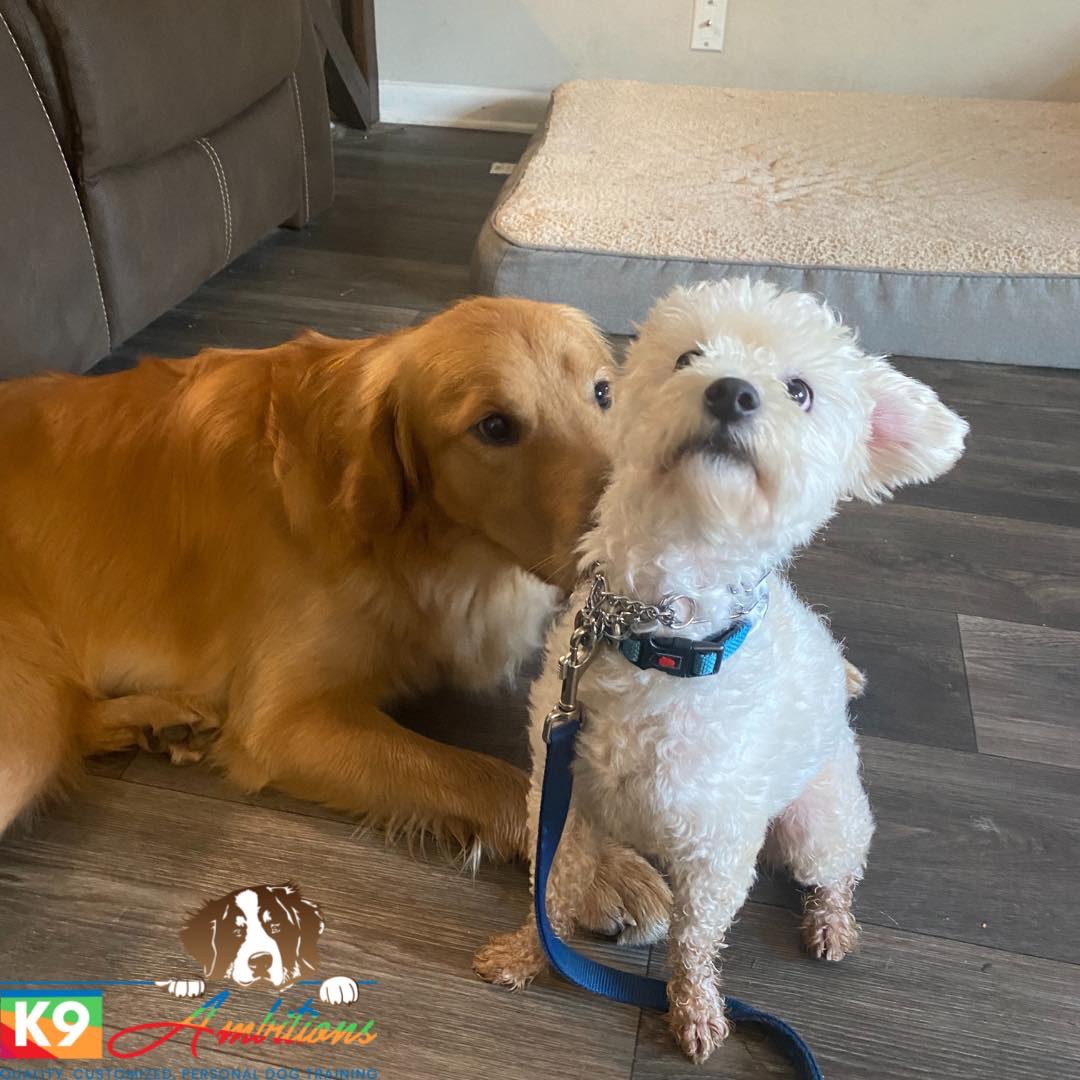
If your dog drags you down the sidewalk, you are not alone. Leash pulling is the single most common reason families call K9 Ambitions. The good news: it is also one of the most fixable behaviors we work on.
The catch is that almost every quick fix you have read on social media — the "stop and start" walk, the front-clip harness, the treat-every-three-steps method — works in someone's living room and falls apart on a real walk. Here is what actually works, what we use during board and train, and how long the real timeline looks.
Why your dog actually pulls
Pulling is not stubbornness, dominance, or a moral failing. It is the simplest behavior in the dog's playbook: the harness or collar pulls forward, the dog gets where it wants to go. The behavior is rewarded by the environment every single time. Until you change that equation, no amount of cookies in your pocket will outweigh the squirrel ten feet ahead.
A few common reasons it happens:
- The dog has never been taught what loose-leash walking actually feels like.
- Equipment is wrong for the dog (a flat collar on a 75-pound shepherd that has never been conditioned to a tool, for example).
- The owner walks at human pace; the dog walks at dog pace; the leash gets tight; everyone keeps walking.
- The dog gets "rewarded" with the walk continuing every time it pulls. The behavior is being trained — just not by you.
The three things you actually have to teach
Loose-leash walking is not one skill. It is three:
- A heel position your dog understands. The dog needs to know where on your body it should stay — not "somewhere near you," but a specific zone (left side, head at your hip).
- A consequence for leaving that zone. Real-world consequences, not nagging. The leash should mean something the moment the dog steps out of position.
- Reinforcement for the right answer. Calm presence. A treat sometimes. Permission to sniff. The dog needs to win when it is in the right place.
Most owners do exactly one of those three. That is why progress stalls.
What we do in week one
Whether a dog comes through our 2-week board and train, the weekday program, or private lessons, the first week of leash work looks similar:
- Day 1–2: Equipment fitted properly (slip lead, training collar, or prong, depending on the dog). The dog learns a calm walk in a low-distraction environment. No stops, no starts. Just mechanics.
- Day 3–4: Add small distractions — another person, a parked car, a smell. The dog learns that the heel position is the answer regardless of what the world is doing.
- Day 5–7: Real environments. Driveways, sidewalks, the door of a Home Depot. The dog learns that the tool means the same thing everywhere.
By the end of week one, most dogs are walking on a slack leash in moderate distraction. They are not bombproof yet — but the behavior exists.
The owner part nobody talks about
Here is the part that frustrates a lot of families: the dog can come home walking beautifully and start pulling again within a week. That is not the dog regressing. That is the owner reverting to old handling habits.
The thing that gets fixed inside a 2-week board and train is the dog's understanding. The thing that gets fixed in our private lesson program — or in the go-home session of every board and train — is the owner's mechanics. Both have to update or the behavior comes back.
Common owner mistakes after pickup:
- Walking with the leash tight by default. The dog feels constant pressure and learns to lean into it.
- Letting the dog walk in front "as long as it isn't pulling hard." That is still pulling. Just slower.
- Skipping the structured walks and going straight to "fun" walks where sniffing, marking, and sprinting happen freely. Those are great rewards — earned after a structured walk, not before.
How long it really takes
Real timelines, not Instagram timelines:
- One to two weeks to get the foundation behavior on the dog. This is what every K9 Ambitions program covers.
- Two to four weeks of consistent owner-led practice to make it the dog's default. This is your job after pickup.
- Three to six months before the behavior is bulletproof in any environment — including squirrel-on-the-bridge, kid-on-a-bike, dog-across-the-street. Real-world reliability lives here.
If anyone tells you they can solve leash pulling in a single one-hour session, ask whether their solution holds up after that session ends. Most do not.
What to do this week (without us)
If you are not ready to start a program yet, here is a one-week starter:
- Walk only on a 4–6 foot leash. No flexi leads. Flexi leads teach pulling.
- Pick a side and stay on it. Most trainers use the left side. Pick one and be consistent.
- Stop walking the moment the leash gets tight. Wait. Move only when the leash is slack. This is slow and unsexy. Do it for one week before deciding it does not work.
- End each walk with five minutes of sit, down, and place at the door. Calm endings teach the dog that walks have a beginning, middle, and a clear end.
If after a week of consistent practice you are still being dragged down the street, the issue is not effort — it is mechanics. That is when professional training is worth it.
When to call a trainer
Call us when:
- The dog is large enough that pulling is a safety risk for you or anyone else who walks the dog.
- The dog reacts to other dogs, bikes, or people on leash. Pulling plus reactivity is two problems, and trying to fix them at the same time without help usually makes both worse.
- You have tried the basics for a month and progress has stalled.
We work with families across Greater Chattanooga — the city, Signal Mountain, Hixson, Red Bank, East Ridge, Ooltewah, and out toward Cleveland. The leash work is the same everywhere; the only thing that changes is where we proof it, whether that is the Riverwalk, a downtown sidewalk, or your own neighborhood at 6pm on a Tuesday.
Want help working through this with your dog? Book a free 30-minute consult and we will recommend the right K9 Ambitions training program — board and train, weekday, or private lessons — based on your dog and your schedule.
Want help working through this with your dog?
Free 30-minute consult. No pressure, no script — just an honest read on what your dog needs and which K9 Ambitions program fits best.
Book a free consult → Call (423) 321-4207